Why Are They Called Stacking Shutters?
Balcony Shutters Australia • October 21, 2026
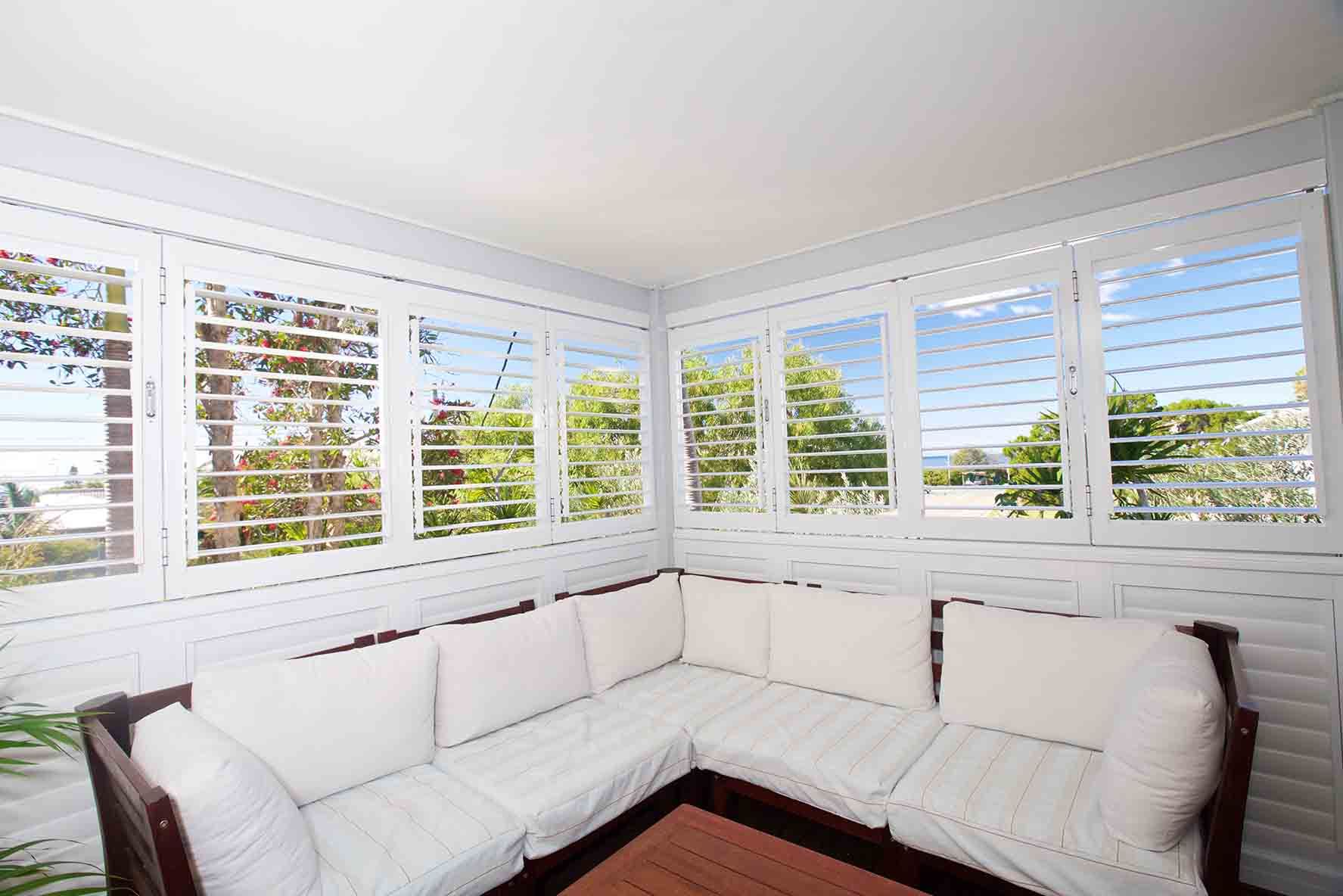
They are called stacking shutters because of the way the panels open. Multiple aluminium shutter panels slide along a track and stack neatly together at one or both sides of a balcony, deck or patio opening. This lets you close the outdoor area for protection, partially open it for airflow or stack the panels away when you want the space completely open.
For wide external openings, that simple sliding-and-stacking action provides flexibility without requiring every panel to swing out into the usable balcony or deck area.
Why Are They Called Stacking Shutters?
The name describes the operating system rather than a particular shutter style. Each aluminium panel travels along a track, allowing multiple panels to move across the opening before gathering, or “stacking”, together at the end.
Depending on the layout, panels can stack to one side or be divided so they stack at opposite ends. This makes it possible to cover a large balcony or outdoor opening without relying on one oversized panel.
The track system can also accommodate more complex outdoor areas. Balcony Shutters Australia can install tracks in straight runs, around corners and at angles, allowing the shutter configuration to follow the shape of the balcony or deck.
For property owners comparing
stacking shutters on the Sunshine Coast, the main point to understand is that they are an external aluminium system designed for balconies and outdoor living areas, not an internal window covering.
How Stacking Shutters Work on Balconies and Decks
Stacking shutter systems use a series of individual aluminium panels guided along a track. You move the panels across the opening when you want greater protection or shade and gather them together when you want to open the area.
This creates several possible configurations throughout the day. The shutters can be closed across the opening, positioned only where protection is needed, or stacked away to create a largely unobstructed outdoor space. For example, imagine a high-rise balcony receiving strong afternoon sun from one direction. Instead of closing off the entire balcony, the owner can position the shutter panels along the exposed section while leaving another part open for ventilation and outlook.
When conditions improve, the panels can be moved back into their stacked position. That flexibility is particularly useful for balconies and decks that need to respond to changing weather conditions.
Stacking Shutters vs Hinged and Fixed Shutters
The key difference between stacking, hinged and fixed shutters is how the panels move. Stacking shutters slide along a track and gather together at the side. Hinged shutters swing open on hinges, while fixed shutter panels remain permanently in position.
A hinged system can work well where there is enough clearance for the panels to swing. However, on balconies where floor space is limited or furniture sits close to the opening, a sliding system can reduce the amount of operating space required.
Fixed panels serve a different purpose because they continuously cover the area where they are installed. They can provide permanent screening or protection but do not offer the same ability to open the space completely.
Bi-fold shutters provide another option, with connected panels folding together as they open. The most suitable system depends on the opening, available space and how the balcony or deck needs to function.
Why Stacking Shutters Suit Wide Balcony and Deck Openings
Wide external openings are where the stacking design becomes particularly useful. The system divides the opening across multiple manageable aluminium shutter panels. This makes stacking shutters suitable for apartment balconies, high-rise properties, outdoor decks, patios and commercial outdoor areas. The track can extend across broad spaces while allowing the panels to be positioned where they are most useful.
When fully stacked, the panels occupy a relatively compact area at the side of the opening. This helps preserve usable balcony or deck space and creates a more open connection between the protected outdoor area and its surroundings.
Custom configuration also matters on larger or irregular balconies. Straight tracks can suit simple openings, while tracks that travel around corners or at angles can accommodate more complex building layouts.
Protection From Sun, Wind and Rain Without Losing Airflow or Views
One of the practical advantages of external aluminium shutters is the ability to adjust the level of exposure rather than permanently enclosing an outdoor area.
Closing or positioning the shutters can provide additional protection from strong sun, wind and rain. When conditions are mild, the panels can be opened or stacked away to maximise ventilation and views. This flexibility can make a balcony or deck more usable across changing conditions. An exposed outdoor area that becomes uncomfortable in strong afternoon sun or wind can be screened where needed without permanently changing its open-air character.
Adjustable shutters can also help create a more protected outdoor room off the living area. The shutters remain part of the external balcony or deck environment, while giving occupants greater control over how exposed that space feels.
The result is not complete weatherproofing. Rather, the system provides a practical way to manage exposure while retaining the airflow and openness that make balconies and decks appealing.
Why Aluminium Stands Up to Coastal Conditions
External shutters on Queensland balconies need materials suited to outdoor exposure. Aluminium combines a sturdy structure with relatively low weight, making it well suited to movable shutter panels.
Balcony Shutters Australia's aluminium systems are built to withstand exposure to heat, rain and wind. For coastal properties, aluminium also avoids the swelling, warping and moisture absorption associated with materials such as timber. This is particularly relevant for apartment and high-rise balconies where shutters remain exposed to changing weather throughout the year. The material needs to suit the location as well as the operating system. For a closer look at this application, read more about why aluminium shutters are ideal for high-rise living.
Balcony Shutters Australia manufactures shutters at our Caloundra factory and handles the full installation. This allows the shutter system and track configuration to be designed around the specific balcony, deck or outdoor opening.
A Clean, Modern Look for Apartments and Outdoor Living Areas
External shutters are highly visible on balconies and building facades, so their appearance matters alongside their practical function.
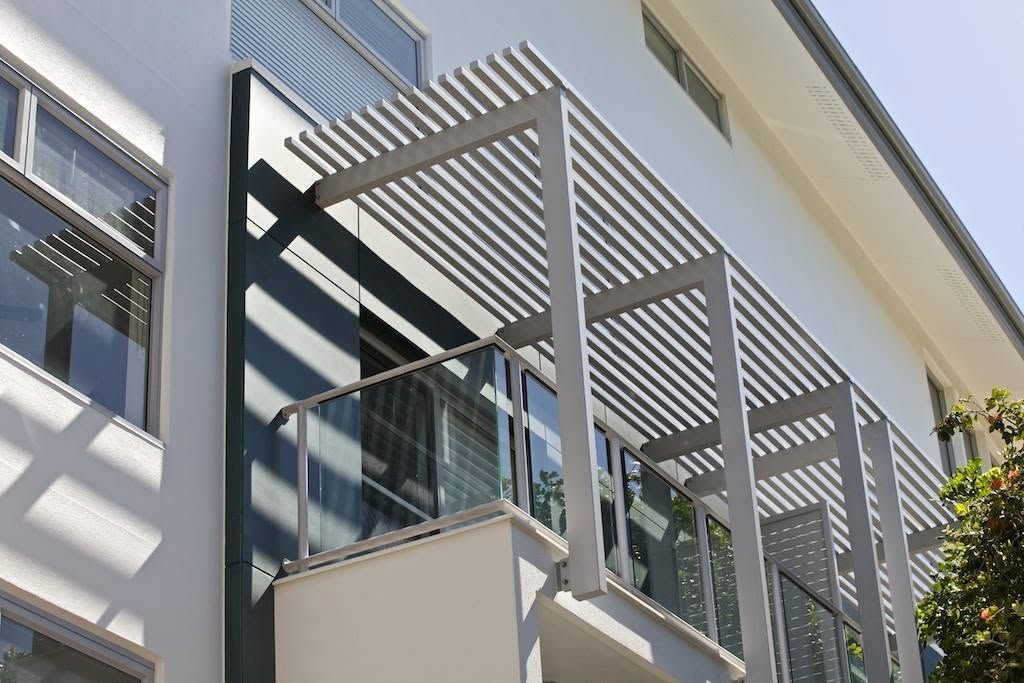
Aluminium stacking shutters provide clean lines that complement contemporary apartments, high-rise developments and modern outdoor living areas.
When closed or partially positioned, the repeated panels create a consistent architectural feature across the opening. When stacked away, they allow the balcony or deck to return to a more open configuration. This makes them suitable for homeowners wanting to improve an existing outdoor area as well as builders, architects and developers planning external balcony solutions for new projects.
The main advantage is flexibility. Stacking shutters take their name from a straightforward operating principle, but that movement allows a wide outdoor opening to adapt to sun, wind, rain and changing use throughout the day.
If you are planning shutters for an apartment balcony, high-rise property, outdoor deck or commercial space, contact Balcony Shutters Australia to discuss an aluminium shutter system designed for your opening and installed by our team.
FAQs
How do stacking shutters open?
Multiple aluminium panels slide along a track and gather together at one or both ends of the opening. This allows the shutters to cover the full area, sit in selected positions or stack away when you want the balcony or deck open.
Can stacking shutters go around balcony corners?
Yes. The track system can be configured in straight lines, around corners and at angles, depending on the balcony or outdoor area's design. The final configuration needs to be planned for the individual space.
Are stacking shutters suitable for high-rise balconies?
They can suit high-rise applications because they provide an adjustable external barrier across exposed balcony openings. Aluminium construction also makes them suitable for outdoor environments where the shutters encounter sun, wind and rain.
Do stacking shutters completely enclose a balcony?
They provide adjustable protection across balcony openings but should not be confused with creating a fully sealed, weatherproof room. Their main advantage is the ability to manage exposure while retaining ventilation and the option to open the area.
What is the difference between stacking and hinged shutters?
Stacking shutters slide along a track and gather at the side, while hinged shutters swing open around a hinged edge. Stacking systems can be particularly practical across wide openings or where you want to avoid panels swinging into usable outdoor space.
Where are Balcony Shutters Australia shutters made?
Balcony Shutters Australia manufactures aluminium shutters at our Caloundra factory. We also handle installation, allowing your system to be configured for the specific balcony, deck or outdoor area.