Common Misunderstandings About Balcony Design And Comfort
Balcony Shutters Australia • October 14, 2026
A balcony that looks impressive in a property listing or a developer's render does not always translate into a space that gets used. The gap between a balcony that is visually appealing and one that is genuinely comfortable year-round comes down to a set of design and orientation decisions that are often misunderstood or overlooked entirely. This guide works through the most common misconceptions and what actually determines whether a balcony becomes a functional part of daily life or an expensive surface that collects leaves and furniture covers.
Why Bigger Isn't Always Better: Layout, Orientation And Usability
The most persistent misunderstanding in balcony design is that size is the primary determinant of usability. A large balcony that is exposed to afternoon sun, catches wind from the wrong direction, or lacks any means of managing the elements will be abandoned for most of the year. A smaller, well-oriented balcony with thoughtful screening and furniture placement will be used daily.
Orientation is the variable that most directly shapes the balcony experience:
- North-facing: receives sun for most of the day — comfortable in winter, but potentially unusable through summer afternoons without shade management
- East-facing: comfortable in the morning and sheltered by afternoon, which suits early-rising households and morning coffee routines
- West-facing: collects the harshest afternoon sun and is challenging to use through the warmest part of the day without intervention
- South-facing: the most sheltered from direct sun, which can be an advantage in Queensland's heat but may feel darker and cooler in winter
Layout within the balcony also affects usability in ways that are not obvious at the planning stage. A long, narrow balcony is difficult to furnish and creates a corridor rather than a space. The relationship between the door position, the furniture layout and any fixed elements like drainage points and structural columns determines how the space actually functions.
The Real Impact Of Wind, Sun And Weather Exposure
Balconies on upper-floor apartments and high-rise buildings occupy a different environment from ground-level outdoor spaces. Wind speed increases with height, and a balcony that appears sheltered at inspection in calm conditions can be genuinely uncomfortable when the typical afternoon sea breeze picks up.
The common responses to sun and wind exposure each carry limitations:
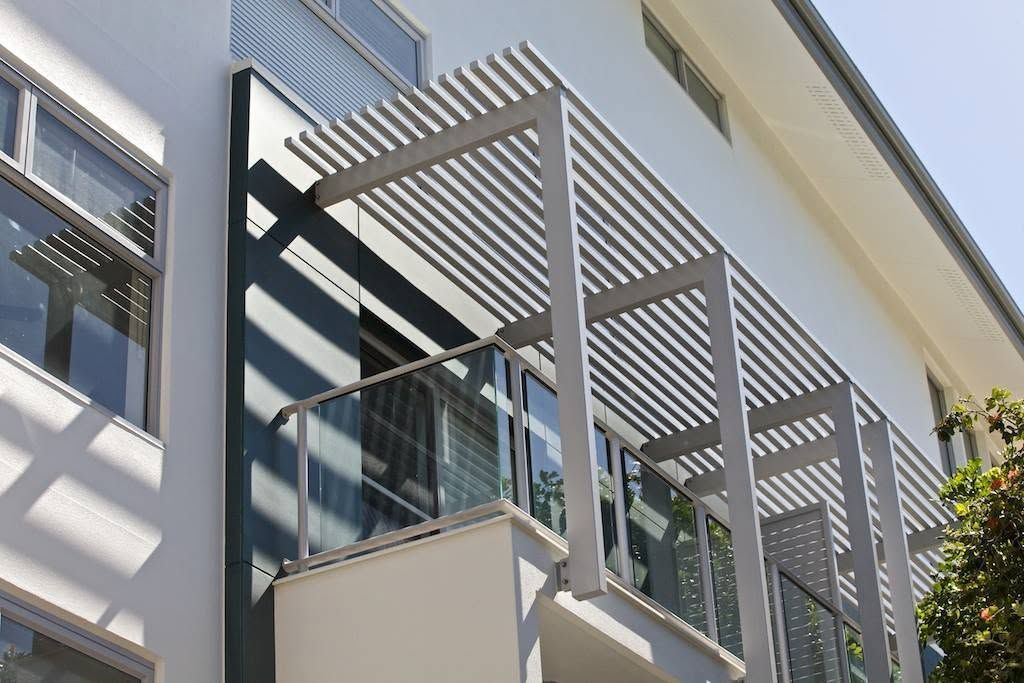
- Fixed pergolas block direct sun but also block the sky view, add structural load and offer no wind management
- Retractable awnings require manual operation and are typically stored when winds exceed a modest threshold — leaving the balcony exposed precisely when protection is most needed
- Market umbrellas need to be weighed down and are genuinely hazardous in strong gusts
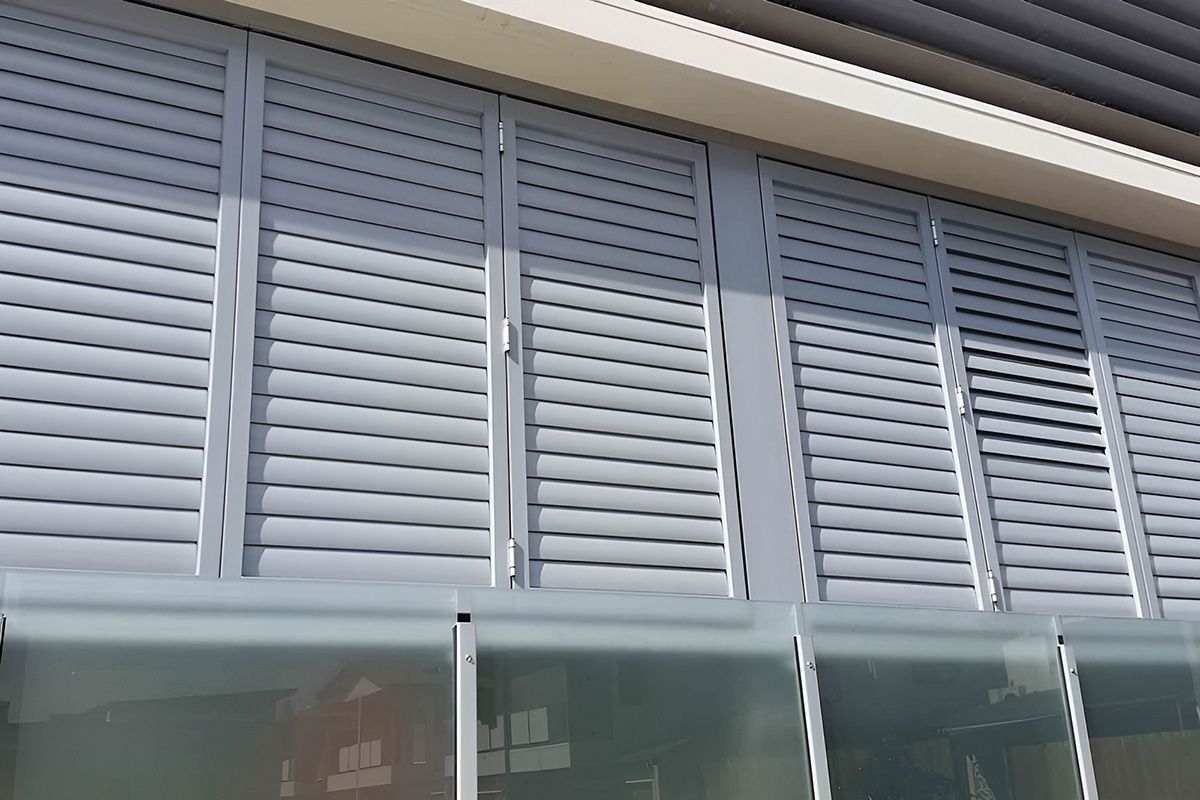
External aluminium shutters address sun, wind and rain simultaneously without these limitations. Mounted externally to the balcony, they can be adjusted to control airflow and light independently — open enough to allow a breeze while blocking direct sun, or closed enough in rain to keep the space usable without fully enclosing it. On high-rise and upper-floor balconies where wind is a persistent challenge, aluminium shutters Sunshine Coast properties use for coastal exposure are designed to handle the structural loads that fabric products cannot sustain.
Flooring, Drainage And Long-Term Durability
Balcony flooring decisions are almost always made on aesthetics, with the durability and drainage implications discovered later. The key trade-offs by material type:
- Timber decking: warm and natural in appearance but requires ongoing maintenance in coastal and subtropical environments — oiling, sanding, and eventual replacement of boards that cup or crack
- Composite decking: avoids some timber maintenance requirements but still needs adequate drainage underneath to prevent moisture issues
- Tiles: durable and easy to clean but require expansion joints and appropriate substrate preparation. Dark tiles reach painful temperatures in direct sun — light-coloured, textured tiles with a low slip rating are the practical specification for most outdoor applications
Drainage is the functional issue that most flooring choices underestimate. A balcony that drains poorly after rain creates a slip hazard and accelerates the deterioration of both the flooring surface and the substrate beneath it. The drainage point position is fixed by the structure — the flooring needs to work with it, not around it.
Railings, Screening And Furniture: Design Choices That Affect Comfort
Balcony railings are a safety requirement, but they also significantly shape the experience of the space:
- Glass railings provide unobstructed views but require regular cleaning in coastal salt-air environments and offer no wind protection at balcony level
- Solid balustrades provide more wind shelter but affect the perception of openness and can make a smaller balcony feel enclosed
- Louvred or slatted screening on the sides of a balcony addresses privacy from adjacent balconies and wind exposure simultaneously, with adjustability that fixed options do not provide
Bifold shutters Sunshine Coast applications demonstrate how a flexible screening solution transforms balcony usability — open fully when conditions are favourable, closed partially to deflect wind without blocking the view, and closed more fully in rain to keep the space usable. The bi-fold configuration allows panels to stack neatly when not needed, so they are not visually dominant on fine days.
Furniture choice is also frequently made without reference to the physical environment. Common mistakes include:
- Upholstered furniture that cannot be left out in coastal humidity — it requires storage, which means it rarely gets used
- Heavy furniture that is difficult to reposition as sun and wind conditions change through the day
- Furniture scaled for a room rather than a balcony, leaving inadequate circulation space
All-weather aluminium or quality synthetic furniture that remains outside in all conditions removes the friction of preparing the balcony for use each time.
Balcony Maintenance Myths You Should Know
The most common maintenance myth is that low-maintenance materials require no maintenance. Every balcony surface, structure and screening system requires some level of periodic attention. In coastal and subtropical environments, the specific maintenance challenges include:
- Salt air deposits that accelerate corrosion of inferior metal components
- Staining of light-coloured materials from airborne debris and organic matter
- Deterioration of sealants and fixings exposed to UV and temperature cycling
Marine-grade aluminium and powder-coated finishes designed for coastal exposure significantly extend the interval between maintenance requirements, but periodic rinsing and inspection remains necessary for any external installation.
The second maintenance myth is that enclosed balconies are harder to maintain than open ones. In practice, a balcony with effective wind and rain screening stays cleaner for longer, because it is not accumulating the airborne debris and salt deposits that an exposed balcony collects continuously. Aluminium louvres Sunshine Coast installations in coastal environments use materials and finishes appropriate to the exposure level, which is the most practical approach to reducing ongoing maintenance requirements.
Getting The Balance Right Between Aesthetics And Practicality
The balcony design decisions that produce the most usable spaces treat aesthetics and practicality as complementary rather than competing. A balcony that photographs well but cannot be used for six months of the year has not achieved either goal.
The practical starting point for any balcony is the same set of questions:
- What conditions does the space need to handle — sun angle, wind direction, rain exposure?
- How will it be used day-to-day, and at what times of day?
- What does it need to do when conditions are at their most challenging?
A balcony that answers those questions through its screening, orientation and furniture has done the hard work. The aesthetic outcome follows from those decisions rather than preceding them.
For apartment and high-rise balconies on the Sunshine Coast, where wind and sun are persistent design challenges, balcony shutters Sunshine Coast provide the external shading, wind protection and weather management that makes the space genuinely usable across the full year — without compromising the views and airflow that make the balcony valuable in the first place.
Contact Balcony Shutters to discuss the specific exposure conditions of your balcony and what screening solution suits your building and orientation.